Saturday, February 11, 2012

Five Photos of Snow and Cold


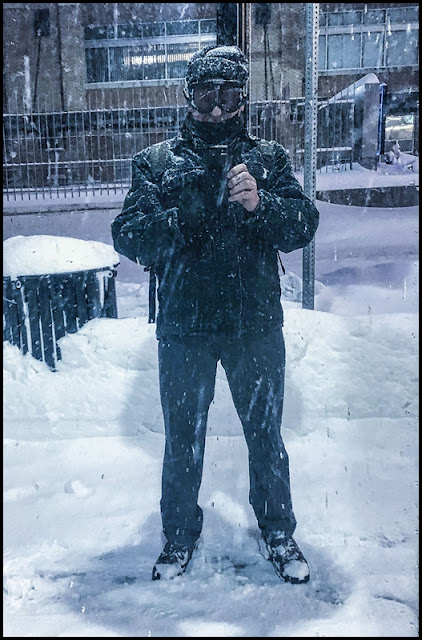
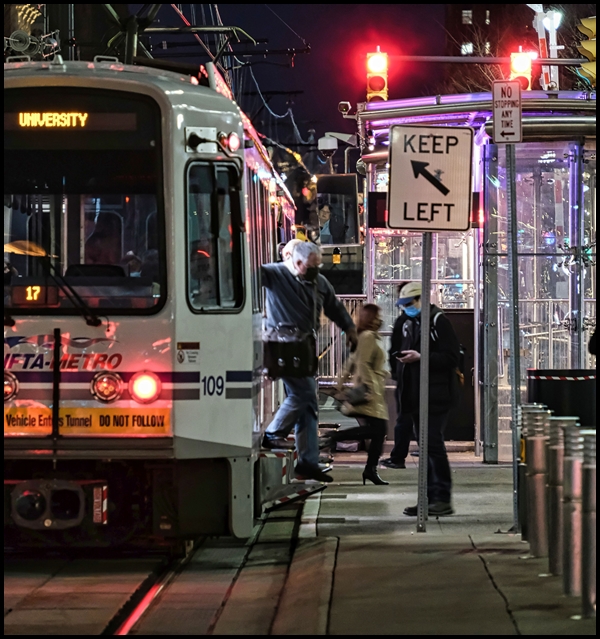
As mentioned in a previous post, we got a good taste of winter last night and today...frigid temperatures and a fair amount of snow. I wasn't out a great deal--just enough to enjoy it--but I did snap a few photos. Even though the above photo was the last I took I chose to place it at top because it is my favorite. I was already home and sitting at my desk when I glanced out the window and saw that sky...the purple and pink were amazing. I went out on my porch, took a couple photos, sat back down and looked out the window again...and it was gone. It lasted like five minutes; I'm glad I had a chance to see it. The next three are various things I saw on my very cold bike ride today. And the bottom one is another favorite...it's actually a duplicate of another photo (click here) separated by a couple weeks....the earlier version shows the same scene without snow. As usual, click any photo for a larger view. Thanks for visiting.


Urban Simplicity.


Shrimp Fra Diavolo


This is by far one of my favorite seafood/tomato sauce recipes. It's easy to make and really delicious...and it has an interesting history also. To read more about it's origins, the reason certain ingredients are included, or to see photos of it being prepared, click here. (And no, to some of the squeamish readers who may be afraid of anchovies, you don't taste them in the sauce...they are more of a nuance--I personally love them and ate a few straight from the can--and yes, to the same group of readers, you can omit them from the recipe...but it's not quite the same.)


Shrimp Fra Diavolo 
Makes 4 portions
6 tablespoons olive oil, divided
1/2 small onion, diced
2 cloves garlic, minced
2 anchovy filets
1 teaspoon crushed red pepper
2 teaspoons minced parsley
1/2 teaspoon basil
1/2 teaspoon salt
2/3 cup red wine
2 cups tomato purée
1/2 pound linguine
1/2 pound large shrimp, peeled and cleaned

Heat 3 tablespoons olive oil in a small saucepot. Add the onion and garlic; sauté until translucent but not browned. Add the anchovies and hot pepper; sauté for 1 minute, mashing the anchovies with a wooden spoon. Stir in the parsley, basil, salt, and red wine. Simmer the wine for a couple of minutes, then add the tomato puree. Simmer the sauce slowly fore about 20 minutes. If the sauce becomes too thick thin it with a little water. While the sauce is simmering boil the pasta until al dente, rinse it and set aside.

Heat the remaining 3 tablespoon oil in a large skillet over high heat. Pat the shrimp dry and carefully add them to the skillet. Stir and toss the shrimp in the hot oil for a minute or two, then add the sauce. Lower the heat to a simmer and cook the shrimp for just a couple minutes. Make sure the pasta is drained well and add it to the sauce. Cook just long enough to reheat the pasta.


Things That Can be Carried on a Bike (#398)...and a few comments on my city-boy quadrathlon


Things on the bike (below photo)...$69.32 of groceries.

A few comments...The photos are in chronological order of my ride today and the day itself.

Last night the temperature plummeted to sub-freezing and we've also gotten a significant amount of snow...only the second time this winter. This is usually the norm for this part of the world for most of the winter, but because it has been so mild I really felt unprepared for both the snow and the cold. But I felt like riding--and was determined to--rather than take the truck, so I did...and what a ride it was. And I'd be fibbing if I said it was an easy ride, thus I've dubbed it my city-boy quadrathlon...it went something like this.

When I left in early afternoon it was still snowing big fluffy flakes (visible in the above photo)...and geeze was it cold, so I bundled up. The streets were not plowed or salted yet so there was a lot of loose snow on them, and one of the things I do for better traction is to let a little air out of the tires. I did have really good traction, but the combination of riding an old bike in the snow with low tire pressure and wearing a heavy Carhartt jacked while pedaling into a strong headwind really gave me a workout...I was sweating and huffing and puffing by the time I arrived at my destination. Ironically, my destination was a health club...having completed this first leg of the quadrathlon I was already tired. After sitting in the steam room for a bit I swam 3/4 of a mile then returned for more steam. On the ride home I stopped for some groceries (seen below) and the wind was at my back so it made riding easier. But the temperature had dropped so much that the inside of my glasses actually became iced so I had to take them off (I sometimes wear simple safety glasses to keep the snow out of my eyes). Having completed the first three sections of my quadrathlon (bike-swim-bike)--and after putting the groceries away--I'm embarking on the most arduous portion yet...drinking wine while warming next to the wood stove and typing these words...(smile).

It felt good today to be out in the elements--to feel the cold and snow against my face--and to feel my body get winded as I pedaled into the wind. It makes me feel alive. And that, I believe, is the main reason I ride a bike whenever I can.


Friday, February 10, 2012

Things That Can be Carried on a Bike (#397)


A canvas bag containing a camera, cell phone, and a book. Five boxes (one is a box-within-a-box); one of which contains two hand-cranked pasta machines (on the front rack), and the other four are empty (need them for some things around the house). Urban Simplicity.


Five Photos No Words


Thursday, February 9, 2012

Kibbeh (Lebanese Meatballs)


Kibbeh is a Lebanese recipe that comes in many shapes and forms, but if you've ever discussed food with a Lebanese person you know that the discussion always comes back to kibbeh. I've mentioned before that I myself am Lebanese-American (half, actually, on my dad's side) and grew up eating this dish. It is basically a Middle Eastern meatloaf mix that is usually made with lamb and instead of breadcrumbs the meat is "stretched" by adding bulgur wheat. There are also vegetarian versions, such as pumpkin kibbeh or potato kibbeh, which are commonly eaten during lent. Today I made meatballs for staff lunch but served them as mini kofta kebobs at a small appetizer party this evening. When I was growing up, though, we didn't eat any of the fore-said versions, our family ate it two ways (that I recall)...baked and stuffed, sort of like a flat meatloaf, or raw, which is called kibbeh nayyeh. Yup raw. Sounds gross to some but my mouth salivates now as I recall it (think of a lamb version of steak tartar). But sadly, in the age in which we live, I haven't had raw kibbeh in years and I'm not sure I would eat some if it were offered to me. Below is a basic recipe, as is a recipe on how to cook it into rice to make a complete meal. But of course I deviated form the recipe when I made this today (don't I always). Today, in addition to the ingredients listed in the recipe (for kibbeh) I also added a bit of cumin, cinnamon, cooked and chopped spinach, and a handful of crumbled feta, simply because I had it on hand. Once the basic recipe is made you can use it for meatballs, skewers, burgers, or add it to sauces, soups, or rice...you get the picture. Anyhow, if you like simple-to-make but super-delicious foods, then try this recipe. ....you won't be sorry, and likely hooked on first bite.

To read more about Lebanese cuisine click here (it's an article I wrote for Sally's Place some years ago...you can tell it's dated by the picture; my son was a toddler and I had a full head of hair).


Kibbeh Meatballs
1/2 cup medium bulgur wheat
3/4 pound boneless lamb, diced
1/2 small onion, diced
1 clove garlic, minced
1 jalapeno, minced
1 teaspoon salt
1/2 teaspoon black pepper
1/4 teaspoon ground allspice
1/2 small bunch mint, minced

Place the bulgur in a bowl, cover with warm water and leave to soak for 10 minutes. Drain and squeeze out as much liquid as possible. Place the bulgur along with the rest of the ingredients in a food processor and process for 20 seconds. Scrape down the sides of the bowl, then process for another 20 or 30 seconds, or until a smooth paste. (You can also use ground lamb and mix the ingredients together for a courser texture.) Stir in the mint, remove the meat from the bowl, shape into small balls and refrigerate for 1/2 hour. Bake, fry, saute, or poach the kibbeh and serve with yogurt sauce.

Yogurt-Cucumber Sauce
1-1/2 cups
1 cup yogurt
1 small cucumber, grated
2 cloves garlic, minced
1 small bunch mint, minced
 1/4 small onion, minced
1/4 teaspoon salt

Combine all of the ingredients in a small glass or ceramic bowl, cover securely and refrigerate for 1 hour. 

Lebanese-Style Rice with Vermicelli and Kibbeh Meatballs
Yield: 4 servings
3 tablespoons olive oil
1/2 small onion, diced
2 ounces vermicelli, broken into 1-inch pieces
1 clove garlic, minced
1 teaspoon cinnamon
1/2 teaspoon allspice
1/2 teaspoon cumin
3/4 teaspoon salt
1-1/2 cups long grain rice
3 cups hot chicken broth
1 recipe kibbeh (recipe follows)
1/4 cup minced parsley
Yogurt sauce for garnish

In a heavy skillet combine the olive oil, onion, and vermicelli. Place the pan over medium heat and cook, while stirring, until the onion and vermicelli begin to brown. Add the garlic, cinnamon, allspice, cumin, and salt; cook another minute, taking care not to burn the pasta or garlic. Stir in the rice, coating it with the oil and spices, then the chicken broth. Add the kibbeh, submerging them in the liquid. Bring to a boil, then lower to a simmer. Cover the pan and simmer for 20 minutes, then remove from the heat and allow to rest for 10 minutes. Stir in the parsley just before serving, and garnish with yogurt.


Urban Simplicity.

Wednesday, February 8, 2012

Five Quotes from Frederick Douglass

Frederick Douglass    February 1818 – February 20, 1895

"I prefer to be true to myself, even at the hazard of incurring the ridicule of others, rather than to be false, and to incur my own abhorrence."

"It is not light that we need, but fire; it is not the gentle shower, but thunder. We need the storm, the whirlwind, and the earthquake."

"No man can put a chain about the ankle of his fellow man without at last finding the other end fastened about his own neck."

"The life of the nation is secure only while the nation is honest, truthful, and virtuous."

"The soul that is within me no man can degrade."

To read more in the Five Quotes series, click here.

Urban Simplicity.

Beauty in the Mundane: Five Photos of Vegetables, Ground, and Sky


The above photo, "Five Baby Carrots," is an image of a few of the carrots I'll be serving as part of a crudité tomorrow...carrots come in a lot of amazing colors (beautiful aren't they). The next three photos are things I saw on the ground while walking: "Lone Acorn in the Evening Sun," "Bent Grate" (I'm still trying to figure out how that could have possibly become bent like that), and "Pavement: Old and New." The bottom photo, "Cold Dusk," was an image I took this evening. It hasn't been very cold lately but it is tonight (and because it's been such a mild winter I feel unprepared). Anyhow, it really represents the weather tonight...windless, cold, and blue.


Urban Simplicity.

Tuesday, February 7, 2012

Middle Eastern Lentil Soup


This is by far one of my favorite soups. It's simple to make, delicious, nutritious, and the variations are seemingly endless. Listed below is the basic recipe but you can add any number of your favorite ingredients to make it a meal-in-itself. The recipe below, for example, is vegetarian but this is equally delicious with the addition of lamb, chicken, or even shrimp. I made this for staff lunch today (leftovers for tomorrow...yum) and I kept it vegetarian but I did veer from the recipe somewhat. A couple things I did differently were that I slowly cooked whole garlic cloves and chilies in olive oil prior to adding the vegetables and spices, and I also added slices of lemon, not just the juice...when the soup cooks the garlic and lemon disintegrate into the broth becoming part of the soup itself. I also added extra vegetables not included in the recipe...cabbage, rutabaga, green beans, and spinach. For the most part I kept the seasonings the same, but I did add a little smoked paprika and turmeric (turmeric not only colors and seasons food, it is extremely good for you). All-in-all, while this is sort of a stone soup version of this recipe, it's not too far off the original path. Anyhow, if you enjoy soup--flavorful and healthy soup--I encourage you to try this recipe, and experiment with your own version...you'll be glad you did. And the simmering spices will make the house smell good, too.


Middle Eastern Style Lentil Soup
  Makes about 2 quarts
3 tablespoon olive oil
1/2 cup diced onion
1/2 cup diced carrots
1/2 cup diced celery
1/2 cup diced bell pepper (red or green)
1 tablespoon minced garlic
1 tablespoon chili powder
1 teaspoon ground cumin
1 teaspoon ground cinnamon
1 teaspoon ground allspice
1/2 teaspoon cayenne pepper
2 teaspoons salt
2 teaspoons ground black pepper
2 cups tomatoes, seeded and diced
2 cups dried lentils
6-8 cups chicken or vegetable broth
2 tablespoon fresh lemon juice
1 bay leaf

Heat the olive oil in a heavy-bottomed pot. Add the onion, car­rots, celery, bell pepper, and garlic; sauté over medium heat for 5 minutes. Stir in the chili powder, cumin, cinnamon, allspice, cayenne pepper, salt and black pepper; sauté for 2 minutes longer. Add the tomatoes, lentils, broth, lemon juice and bay leaf; bring to a boil then lower it to a simmer. Allow the soup to cook for 60-90 minutes or until the soup thickens and the lentils become very soft.


Monday, February 6, 2012

Four More Photos and a Few Words About Them


The sky tonight is/was incredible...or more specifically, the full moon in a crystal clear sky was incredible. And as I gazed at it I couldn't help think of all the people in the northern hemisphere that could see this very same orb in the sky just as I did. Anyhow, the picture above shows the moon hanging low over the neighborhood in which I live.

The photo immediately below is of a mini bronze Buddha statue I purchased at Namaste Bookshop on my most recent trip to NYC.

The next photo below (in the middle) is a cropped image I took of a napkin at a chain coffee shop yesterday (you know which one, no need to give it free advertisement). The napkin said "Real Food; Simply Delicious." Their food looked neither real (what I would call made-from-scratch), nor did it look delicious. Sorry to be a snob but I dislike the marketing machine that convinces many of us what good food should be. Anyhow, it made me think (as if I need something else to make me think), and I'll pose the question to you--the reader of this blog--and it's what I was thinking about at the time...What is real?

The bottom photo is one I took this evening just as dusk was changing to night. The sky seemed to glow and there were crows in all the barren treetops as I rode my bike silently into the wind...it was incredible. I was on my Yuba Mundo and had a camera and mini tripod in a bag in the back so I pulled into an empty parking lot to snap a few photos. I was there for a few minutes crouched next to the bike and behind the camera when I heard someone say, "Can I help you sir?" Well first of all I don't like it when people call me sir, it makes me feel too responsible, and secondly, I was so engrossed at what I was seeing that I didn't even hear him coming...sort of startled me. It turns out he was the security guard to the building whose parking lot I was in...he was concerned that I was taking pictures of the building (even though I was facing in the opposite direction). I told him I was just taking pictures of the birds in the trees (all the trees surrounding the parking lot were filled with them...it was quite impressive). He looked up to see them and as he did he dropped his key ring, making a loud clang on the pavement....many of the birds scattered, flying in all directions, circling low overhead and then returning to the trees. "It's sort of like being in Alfred Hitchcock's movie, The Birds, isn't it," I said to him. "Wellll," he replied in an almost hushed whisper, "I hope it don't get to that...but it sure is beautiful...sometimes I just forget to look up." And with that, he bid me a good night, still looking at the sky as he walked away.

For as much as I talk about being able to take good photos with an inexpensive camera I am also fully aware of their limitations...capturing the birds in motion was one of them. But if you look closely you can see some of them represented as streaky blurs in the sky. In person, though, I have to agree with the security guard...it sure was beautiful. I just hope I keep remembering to look up. Click any photo for a lager view.


Urban Simplicity.

Sunday, February 5, 2012

Five Quotes from Bob Marley

6 February 1945 – 11 May 1981

“Emancipate yourselves from mental slavery. None but ourselves can free our minds.” 

“Wake up and live” 

“I don't stand for black man's side, I don't stand for white man's side, I stand for God's side.” 

“Open your eyes, look within. Are you satisfied with the life you're living?” 

“Who are you to judge the life I live? I know I'm not perfect -and I don't live to be- but before you start pointing fingers...make sure you hands are clean!” 

OK...one more.

“The greatness of a man is not in how much wealth he acquires, but in his integrity and his ability to affect those around him positively”


To read five quote from others I find inspiring, click here.

Urban Simplicity.

Things That Can be Carried on a Bike (#396)...and a quick comment


Things on the bike (above)...A gym bag full of wet clothes, a 4lb bag of dog food, and 3L of red wine.

Below is a self-portrait of sorts...I took it yesterday as I coasted past a particularly reflective stretch of windows in an office building downtown. I wasn't going to post it (never really cared for seeing photos of myself) but as I was going through photos today and saw it, it made me think. Of all the things that I carry on bikes sometimes I forget. Often it's when pedaling uphill or into a strong headwind, but still I forget, or maybe I just take it for granted. What I'm talking about is the efficiency of a bicycle as a transportation machine. Sometimes I forget that the bicycle is the most efficient means of transport there is...and that the most precious cargo any bike can carry is the rider themselves.


Urban Simplicity.

Saturday, February 4, 2012

Back to the Basics: Ezekiel Bread

"Take wheat and barley, beans and lentils, millet and spelt; put them in a storage jar and use them to make bread for yourself."
--Ezekiel 4:9 (NIV)


Regular visitors to this blog know that I like to make my own 100% whole wheat bread, but also that Ezekiel Bread is my favorite (and though I don't currently have data to back this up, I am convinced this is the most nutritious bread there is). I haven't posted the recipe in a while so thought I would for a couple reasons. The first, simply, is that I like it. And the second is that when talking to people (or if they taste the bread) they tell me the bread looks or tastes really good but the recipe seems complicated. Well I'm here to let you in on a little secret...it's not. The only difference between this bread (or any other bread that contains whole boiled grain) is that the beans and grain are boiled before being added to the recipe. Anyhow, this is how I made Ezekiel bread today (pictured above) without letting it interrupt my life...rather, I controlled it so that the various stages worked around my time today (the recipe is at the bottom of this post).

This morning, shortly after lighting a fire in the wood-burning stove, I boiled some beans and grains. I don't often use the wood-burning stove to cook on that often--in fact I haven't used it as often as usual for heat because of the mild winter--but today I did, and the boiling grain made the house smell great (my two pugs loved it...that's them below sleeping next to the stove). And over the years my view of this recipe--or more specifically, my  view of the beans and grains involved--are on the same line with my view of theology...extremely liberal (to read more about my liberal views of this bread, click here). Today, for example, I didn't have millet or bulgur but did have brown rice and chick peas so I used them instead...nearly any bean or grain will do (but not to worry, the recipe listed below is tried and tested...and it works). Anyhow, while I had my coffee, checked emails, Facebook, and updated this blog...the beans and grains boiled. When they were done I placed them outside on a rear porch railing to cool (it was only 32F/0C...why tax my fridge). And while it cooled I went and did a few errands on my bike, stopped at a coffee shop, and took a few photos.


When I returned the beans and liquid were cool, so I mixed the two separate bowls (see recipe below) and went for a walk and to a health club for a quick swim. When I returned I mixed the dough, had dinner, then "went to my inner room" for a few minutes of meditation.


After the dough rose I went to a local tavern for a couple beers, but before I did I shaped the loaves and put them in their loaf pans. And just before I left the house I turned on my oven to preheat it (my 20-year-old oven takes a long time to heat). When I returned home the bread was risen and oven hot so, after spraying both the bread and oven with water, I placed it in the oven. While the bread baked I wrote the previous post, pet my dogs, and had a glass of wine. And now, as I type these words, the rear of the house is warm--because the oven was on--the entire house has the awesome aroma of freshly baked bread, and I have two loaves of really good Ezekiel bread that cost pennies to make (compared to dollars at the local co-op for a sometimes mediocre loaf). I'll freeze one loaf and slice into the other for toast in the morning...but actually, I think I'll go grab a slice right now with butter on it while it's still fresh and warm.


To read more about Ezekiel Bread and with more explicit photos, click here or here (but please use the below recipe as it is the revised version).

Whole Wheat Ezekiel Bread
Makes 2 or 3 loaves
12 cups water
2 tablespoons white beans
2 tablespoons red beans
2 tablespoons spelt berries
2 tablespoons lentils
2 tablespoons barley
2 tablespoons millet
2 tablespoons bulgur wheat
___________________
cooked beans and grains
½ cup cooking water
2 cups whole wheat flour
2 teaspoons instant yeast
___________________

4 cups whole wheat flour
3 tablespoons vital wheat gluten
2 cups cooking liquid
___________________

1/4 cup honey
1/4 cup olive oil
3 teaspoons kosher
3 teaspoons instant yeast

Boil the grains in the water in logical succession according to cooking times: first the white and red beans (about 60 minutes), when they are soft add the, spelt berries, lentils, and barley (about 30 minutes); lastly, add the millet and bulgar (about 10 minutes). The key is that after each addition the previous grain must be soft enough so that when all of the grains are in the pot they will all be equally soft; undercooked grains (especially the beans) can really ruin this bread. And as the grains cook add more water to the pot as necessary because the cooking liquid, which is full of nutrients, will become part of the recipe (keeping a lid on the pot will slow it's evaporation). After the grains are cooked allow them to cool in the liquid to room temperature, refrigerating if necessary. After the grains are cooled drain them, squeezing them with your hands or the back of a spoon, reserving the cooking liquid.

Place two bowls side-by-side; one will hold the pre-ferment, the other autolyse. In one bowl combine the cooked and drained grains with ½ cup of the cooking liquid, 2 cups whole wheat flour, and 2 teaspoons instant yeast. Stir it just until combined then cover it with plastic wrap. In the other bowl combine 4 cups whole wheat flour, 3 tablespoons vital wheat gluten, and 2 cups cooking liquid; stir it just until combined then cover it with plastic wrap (take care not to get yeast into this bowl). Allow the bowls to rest at room temperature for about an hour, during which time the preferment will begin it's job multiplying yeast and fermenting flour, and the autolyse will soak liquid, swelling the gluten.

After an hour or so, combine the ingredients from both bowls into the bowl of an upright mixer fitted with a dough hook. Add the honey, olive oil, salt, and 3 teaspoons of yeast (add the yeast and salt on opposite sides of the bowl. Knead the dough on medium speed for about 8 minutes. Place the dough in a lightly oiled container, cover it loosely, and allow to ferment for 1-2 hours, or until doubled in bulk. Deflate the dough and allow it to ferment an additional 30 minutes.

Turn the dough out onto a floured work surface and cut it into 2 or 3 pieces. Shape into loaves and place into lightly oiled pans. Loosely cover the loaves with plastic wrap and allow to ferment for 30-60 minutes, or until double in size and when gently touched with a fingertip an indentation remains.

Bake the breads for about 30-40 minutes, adding steam to the oven a few times (either with ice cubes or a spray bottle) and rotating the breads every ten minutes. The breads are done when they are dark brown and sound hollow when tapped upon. Remove the breads from their pans and allow them to cook on a wire rack for at least 10 minutes before slicing.

A Few Things I Saw Today


I've used this comparison before but have to mention it again...you see a lot more when on a bike than in a car but you see ten times that when you walk. Because, like a car, when you ride a bike you have to stay in control--or at  least keep the bike in control lest you fall. But when walking, especially in a neighborhood that is familiar to you, you can walk somewhat aimlessly and take it all in...and that's just what I did today. I have a couple things laying heavy on me--concerns and decisions to make--and one of the best things to help level my thoughts (besides prayer and meditation) is a good contemplative walk. I really believe that there is art and beauty all around us--even in the middle of a city--and that all one has to do is look. Anyhow, these are just a few of the things I saw today on my short walk (a mile each way) to the health club.

I saw the above squirrel--rather, he saw me first--as I approached it at the corner of  Delaware and Summer Street. It darted from in front of me, forgetting the chestnut it was chewing, then came back--looking at me the entire time--to retrieve it before scurrying onto the fence to finish it's consumption. He was, I'm guessing 30ft/9m from me--truly taxing the zoom on my little point-and-shoot camera--but I'm sure he was watching me out of the corner of his eye. I watched him for a moment and wondered if he ever worried about money or paying bills or about anything for that  matter. Likely not. His concerns are honed to where his next chestnut is, how secure his shelter, or if there are any predators about.

The photo directly below is the shadow of a fence very near where the squirrel was sitting; the light seemed just right at the moment I was standing there.

The next photo below, and in the middle, is of a flower I'm sure I saw while in full bloom (I walk/ride this route often). In the height of season it was I'm also sure, white, fluffy, and full of life. But now, brown and withered, it still stood defiant of it's decay.

And the most bottom photo (and this is my favorite) is a little hidden gem in the city. I've photographed this path before and in all seasons though not this close up (meaning I walked down it a bit). It's a private path (a rear entrance to someone's home) but to me it looks like it could be somewhere in rural Europe. What's interesting is that it is located on Summer Street in the city of Buffalo.

Walking is good for your physical health but also good for your mental/emotional health, at least for me it is. So the next time you feel anxious or need to work something out internally, go for a walk, you'll be amazed at what you see in your own neighborhood...but don't forget to bring a camera.


Urban Simplicity.

Friday, February 3, 2012

Clever


I came across this sometime ago and downloaded it. While looking for another image today I came across it again and it made me chuckle a bit (but, of course, there is some truth to the label). Anyhow, I thought I'd share and re-post it. My apologies, but I cannot remember who the original author or artist is.

Urban Simplicity.

Thursday, February 2, 2012

Five Photos of Wood


I took these while splitting logs for a fire tonight...funny thing is, I never got around to lighting the wood stove. Nonetheless, interesting patterns (I think). Beauty in the mundane...this, I'm beginning to realize, is what's really important to me. Or, at the very least, it's what keeps me focused on the present moment (which, for me, is really difficult).


Urban Simplicity.

Chaudrée (deux recettes)


Many American foods have their roots firmly planted in Europe and have developed in this country in a sort of convoluted fashion. The recipes were often brought to our country with immigrants when they migrated here, and usually adapted to utilize ingredients that were readily available. Chowder, for example, had its beginnings in France, then was brought to French Canada before finally evolving into the chowders that are famous to the New England region of our country. The English word chowder, in fact, is said to be derived from the French word chaudière—the pot in which chaudrée, or chowder, is cooked. The root word from which these are based is chaud, French for hot; chaudière translates literally to cooker or heater. And if there were such a thing as a family tree relating to foods, chowder's first cousin once removed would be, in my opinion, Louisiana gumbo. That hearty dish takes its name from the West African word gombo, meaning okra, and seems to be a sort of abstract of a chowder recipe that has evolved with the conglomeration of peoples in Southern Louisiana, including some of the French that fled Eastern Canada to that region.

The chaudrée of Northwest France is a sort of fisherman's stew, which consists of seafood of the region simmered in broth along with vegetables and herbs. A listing in the French cookery encyclopedia Larousse Gastronomique translates chaudrée to English simply as "fish soup." It goes on to state the various seafoods that can be included in the dish, including eel! When the French of that area migrated to Canada, not surprisingly, they brought with them their beloved recipes for chaudrée. A 1970 edition of the bi-lingual book Food-À La Canadienne lists two recipes for chaudrée; one is based on fish and the other potato. When some of these French migrated southward, into New England, the language of course was English and chaudière, or chaudrée, began to be pronounced as—and eventually known as—chowder. There, the chowders were based on clams simply because of their regional abundance. It wasn't until the early 1900's that a creative restaurateur at Coney Island replaced the milk in chowder with tomatoes to create Manhattan Clam Chowder; this was, at the time, a travesty to a New Englander.

Chowder today can be based on almost any meat, fish or vegetable, though many purists will probably dispute this. There are a few guidelines that should be followed though. Chowder is usually a rather rustic soup with coarse-chopped ingredients; though it is often thickened naturally, traditional chowder does not contain flour as a thickening agent, but a little flour will give the soup a certain viscosity. Most importantly, the two defining ingredients that denote chowder are diced potato and cured pork, such as salt pork or bacon.


Potato Chowder
(Chaudrée de Pommes de Terre)
Yield: 3 quarts
3 tablespoons unsalted butter
12 ounces diced lean ham
1 cup diced onion
1/2 cup diced carrots
1/2 cup diced celery
2 teaspoons minced garlic
2-1/2 pounds peeled and diced potatoes
6 cups chicken stock
1 teaspoon thyme
1 teaspoon salt
1/2 teaspoon black pepper
1 cup milk (optional)

Heat the butter in a large heavy soup pot over medium high heat, when it begins to bubble add the ham, onions, carrots, celery and garlic. Sauté the vegetables and ham for approximately 5 minutes, until they are soft and translucent but not browned. Stir in the potatoes, chicken stock, thyme, salt and black pepper. Bring the soup to a boil then lower the heat to a low simmer; skim any impurities that may have risen to the surface of the soup. Simmer the soup for 45-60 minutes, stirring often.

Using a wire whisk, gently break apart some of the potatoes to give the soup some viscosity. If adding the milk, do so directly before serving the soup and do not boil it once the milk has been added.

New England Clam Chowder
Yield: 4 quarts
2 dozen chowder clams (quahogs)
2 quarts water or chicken stock
1/4 cup diced salt pork
1 cup diced onion
1/2 cup diced celery
1/2 cup diced carrots
1/2 cup flour
1/2 cup diced potato
1 teaspoon fresh thyme
1/2 teaspoon salt
1 teaspoon black pepper
1 quart milk

Place the clams in a pot with the water or stock. Cover and steam them for about 10 minutes, or until they are fully cooked and completely open. Strain the broth and reserve it; remove the clams from their shells and discard the shells. Chop the clams and reserve them.

In a heavy soup pot over medium heat, sauté the salt pork until it is golden brown, crispy, and all the fat has rendered from it. Add the onion, celery, and carrot; sauté another 2 minutes. Stir in the flour, lower the heat slightly and cook the vegetables and flour for 5 minutes, stirring continuously. Add the potato, thyme, salt and pepper, stir the potatoes to coat them with the fat and flour. Add the clam broth to the pot a little at a time, while stirring, to avoid any lumps. Bring the soup to a boil to a boil and add the chopped clams. Lower the heat, skim any scum that has risen to the surface and simmer the chowder for 15 minutes.

Stir in the milk, but do not boil it. If desired, garnish the chowder with a sprinkling of chopped parsley, paprika, and a pat of butter.